
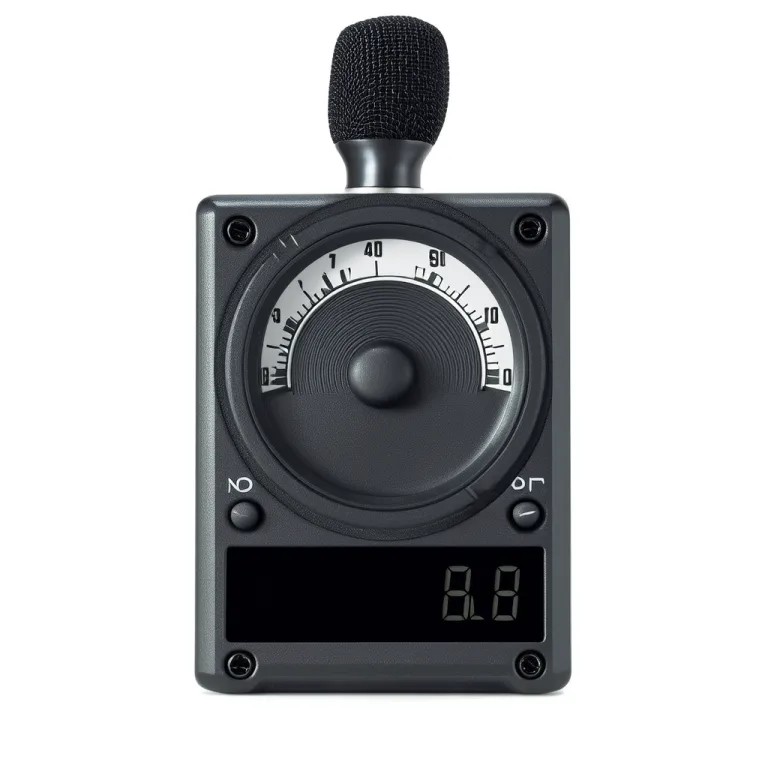
Sound Level Meter
Sound level meters measure noise levels in decibels.
About Sound Level Meter
Sound level meters measure noise levels in decibels.
| Domain | acoustics |
|---|---|
| Product Family | acoustic_measurement |
| Engineering Function | Quantitative measurement of sound pressure level in decibels (dB) for environmental, occupational, or industrial noise assessment |
Who Works With Sound Level Meter?
6 engineering roles are connected to Sound Level Meter based on verified research evidence.
Engineer
Technician
Technician is a widely recognized professional role in HVAC engineering, explicitly referenced in ASHRAE guidance for cooling tower systems. While generic, it denotes a credentialed, hands-on technical role responsible for installation, commissioning, operation, inspection, maintenance, troubleshooting, and testing of HVAC equipment including cooling towers. It is not product-specific (e.g., no 'Cooling Tower Technician' prefix), so product_specific_title = false. The role is distinct from engineers or operators and falls under the Maintenance family with broad technical execution responsibilities.
Acoustical Engineer
Acoustical Engineer is a well-established, ABET-accredited engineering discipline focused on sound and vibration. In the context of sound level meters, this role contributes to instrument design (e.g., microphone response, signal processing), specification of performance criteria (e.g., IEC 61672 compliance), calibration methodology, field validation, and interpretation of acoustic measurements for regulatory or environmental applications.
Occupational Health and Safety Specialist
Occupational Health & Safety Specialist is a widely recognized professional role (e.g., O*NET SOC 19-5011, ISO 45001-aligned) that routinely uses sound level meters to assess workplace noise exposure, ensure regulatory compliance (OSHA 29 CFR 1910.95, ISO 9612), and conduct field acoustic measurements. The role does not depend on the product name but applies it functionally across domains — here, acoustics — making it generalizable and not product-specific.
Environmental Technician
Environmental Technician is a widely recognized professional role in environmental health and safety, frequently tasked with field-based noise measurements using sound level meters; job listings (e.g., Indeed) confirm direct operational use of such instruments for regulatory compliance (OSHA/ISO), data collection, and reporting — aligning with OPERATE, TEST, and INSPECT relationships to the sound level meter.
Environmental Engineer
Environmental Engineer is a widely recognized professional engineering role. In the acoustics domain—particularly for sound level meters—the role conducts noise surveys using such instruments, evaluates noise exposure, specifies appropriate measurement equipment (e.g., Class 1 vs. Class 2 SLMs), interprets acoustic data for compliance, and may specify or validate test protocols. The evidence explicitly links this role to conducting noise surveys with calibrated sound level meters and ensuring regulatory compliance (NIOSH/OSHA), confirming direct functional relationships to selection, specification, testing, and inspection of the product.